
Guides
Why Outdoor Play Matters More Than You Think
By Parks of Utah · June 1, 2026
It's Not Just "Burning Energy"
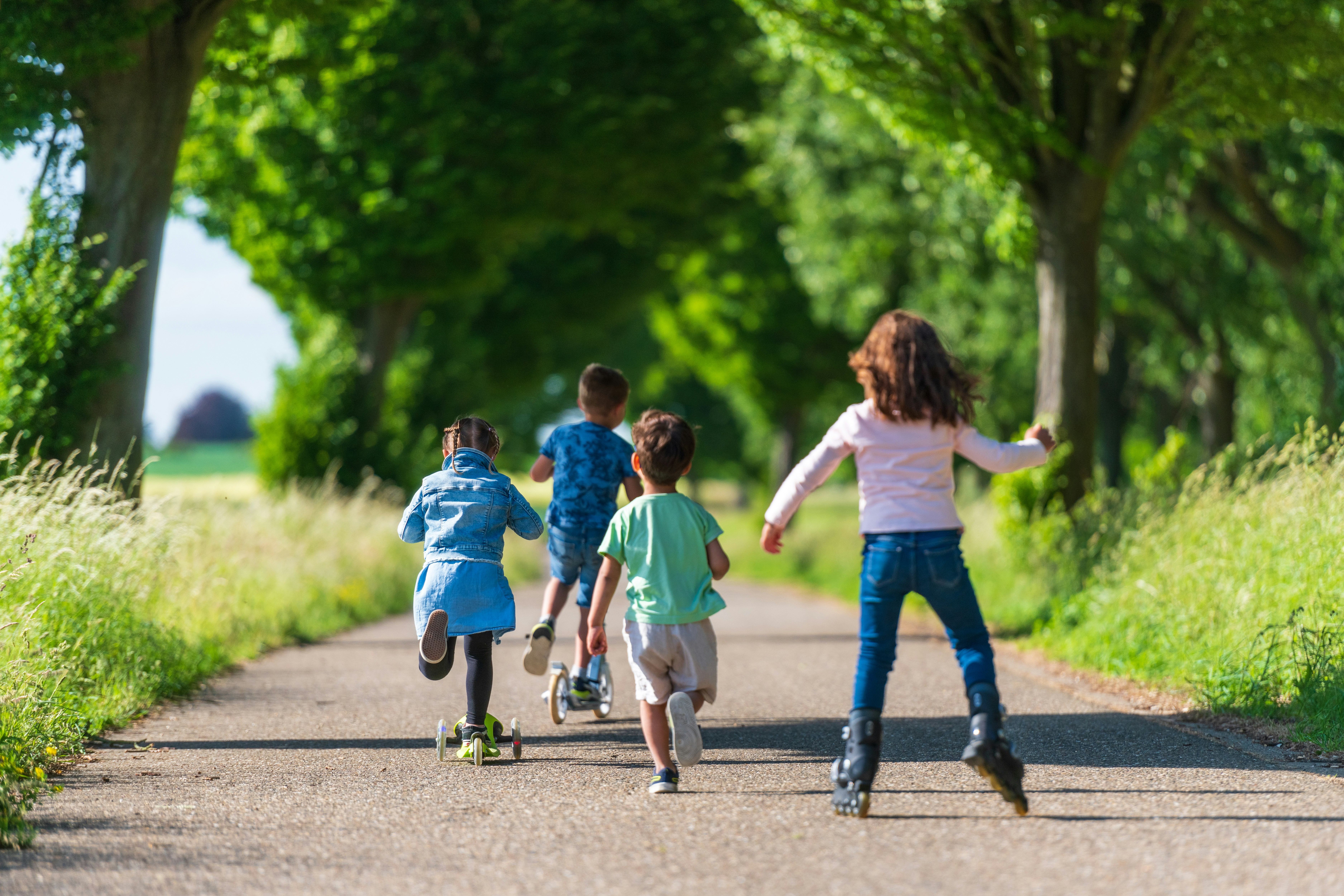
Most parents send kids outside because the house gets loud. That's a completely valid reason. But what's happening out there — on the climbers, in the dirt, around other kids — goes a lot deeper than wearing them out before bedtime. Decades of research on child development point to outdoor play as one of the most productive things a child can do, full stop. Not screen time. Not structured classes. Unstructured outdoor play.
Utah families are lucky here. Between the neighborhood parks, the open space, and the sheer variety of terrain this state offers, there's no shortage of places to make it happen. The question is less "where do we go?" and more "do we actually understand why we're going?" Because once you do, you prioritize it differently.
What Outdoor Play Does for the Brain
When a child navigates a wooded trail, decides how to cross a muddy patch, or figures out the rules of a made-up game with three other kids, their prefrontal cortex is working hard. That's the part of the brain responsible for planning, decision-making, and impulse control — all the things parents and teachers spend years trying to develop. Outdoor play builds it naturally, through repeated low-stakes problem-solving that no worksheet can replicate.
Exposure to natural environments also has a measurable calming effect on kids. Studies out of the University of Illinois found that children with ADHD showed significant improvements in concentration after time spent in green spaces, compared to indoor or urban settings. You don't need a diagnosis to benefit from that. Any kid who comes inside from an hour at the park and sits down more easily at the dinner table is showing you the same effect.
The Physical Development Side
Gross motor skills — running, jumping, climbing, balancing — develop through use. That sounds obvious, but it's easy to underestimate how much variety matters. A child who only ever plays on flat surfaces misses the balance challenges that build core strength and spatial awareness. A child who never climbs anything doesn't develop the grip strength and body confidence that carry over into sports, swimming, and even everyday coordination.
Parks with varied equipment matter here. High Sky Park in Spanish Fork, for instance, draws families specifically for its more adventurous play structures — the kind that actually challenge older kids rather than just occupy them. That challenge is the point. Mild, managed physical risk (a higher climb, a steeper slide) teaches kids to assess their own limits, which is a skill in itself.
Fine motor development gets a boost outdoors too, in ways that don't always look like "play." Digging, stacking rocks, threading sticks through a fence — all of it builds the hand-eye coordination and dexterity that show up later in handwriting, drawing, and instrument playing.
Social Skills You Can't Teach in a Classroom
Put a group of kids on a playground with minimal adult intervention and watch what happens. Within minutes they're negotiating, arguing, recovering, and trying again. That messy, sometimes frustrating process is where some of the most important social development occurs. Kids learn to read body language, manage conflict, take turns without being told to, and recover from minor social failures — all without a structured curriculum.
This is harder to replicate indoors. Even the best classroom is a managed environment with adult mediation close at hand. The playground is where kids practice the real thing. Parks with distinct zones for different ages help here — a toddler area where little ones can interact at their level, and bigger open fields or equipment for older kids to form their own loose social hierarchies and group games.
Glendale Regional Park in Salt Lake City and Confluence Park in Murray both draw enough community foot traffic that your kid is likely to encounter other kids they don't already know — which is exactly the scenario that builds those social muscles fastest.
Nature Specifically (Not Just "Outside")
There's a difference between a parking lot and a park, and there's also a difference between a concrete playground and one with trees, grass, water, and varied terrain. Research from environmental psychologists suggests that natural elements — moving water, varied plant life, uneven ground — engage children's attention in a softer, more restorative way than built environments do. Kids who regularly spend time in more natural settings tend to show better stress regulation and mood stability over time.
That's part of why parks with natural features stand out. Bluff Park in the small town of Bluff sits against a dramatic red rock backdrop that no playground designer could replicate. Hyrum Veterans Memorial Park up in Cache Valley gives kids access to open grassy space alongside natural scenery that just feels different from a purely urban park. You notice the shift in how kids behave — they slow down, they explore, they invent things to do rather than waiting for entertainment.
What About Risk? (The Honest Conversation)
American playgrounds have gotten safer over the past thirty years — and in the process, somewhat less useful for development. When researchers study "risky play" (heights, speed, rough-and-tumble, wandering slightly out of sight), they consistently find that it builds risk-assessment skills, resilience, and confidence. A child who never experiences manageable failure outdoors is poorly equipped for the bigger failures that come later.
This doesn't mean ignoring real hazards. It means letting a six-year-old climb to the top of the structure even if it makes you hold your breath, or letting a nine-year-old explore the edge of a trail while you hang back a little. Parks like Castle Dale Bike Park are built around exactly this philosophy — progression, challenge, and learning through doing rather than watching.
Screen Time Isn't the Enemy, But Context Is Everything
It's not useful to frame this as "outdoor play vs. screens." Kids in 2024 are going to have both, and that's fine. What the research does suggest is that outdoor play and screen time serve fundamentally different developmental functions. Screens tend to be passive and stimulating. Outdoor play tends to be active and regulating. The problem isn't screens existing — it's when screens crowd out the outdoor time that kids genuinely need to develop.
The American Academy of Pediatrics recommends at least an hour of physical activity per day for kids ages 6 and up, and quality outdoor play is the most natural way to hit that. Not a gym, not a structured sport practice (though those help too) — just kids moving through space with some freedom and some other kids around.
Getting Out There More Often
The practical barrier for most Utah families isn't motivation — it's habit and logistics. A few things that actually help: identifying two or three parks close enough to visit on a weekday without it becoming a production, going early enough in the summer that the heat isn't a factor, and being willing to let kids lead the agenda once you're there rather than organizing their play.
Parks like Brandon Park in Eagle Mountain and Farm Meadows Park in Woods Cross are solid neighborhood-scale options — easy to get to, well-maintained, and low-key enough that a Tuesday afternoon visit doesn't feel like an event. That regularity matters more than any single memorable outing. Consistent, frequent outdoor play time does more for development than one big trip to a famous trail every few months.
The parks are there. The case for going is stronger than most parents realize. The rest is just making it part of the week.